 Sampling principle
Evaluation Framework
Six checks before moving from sample to bulk.
A sample kit should help a buyer reject weak options quickly and identify the few teas worth quoting seriously.
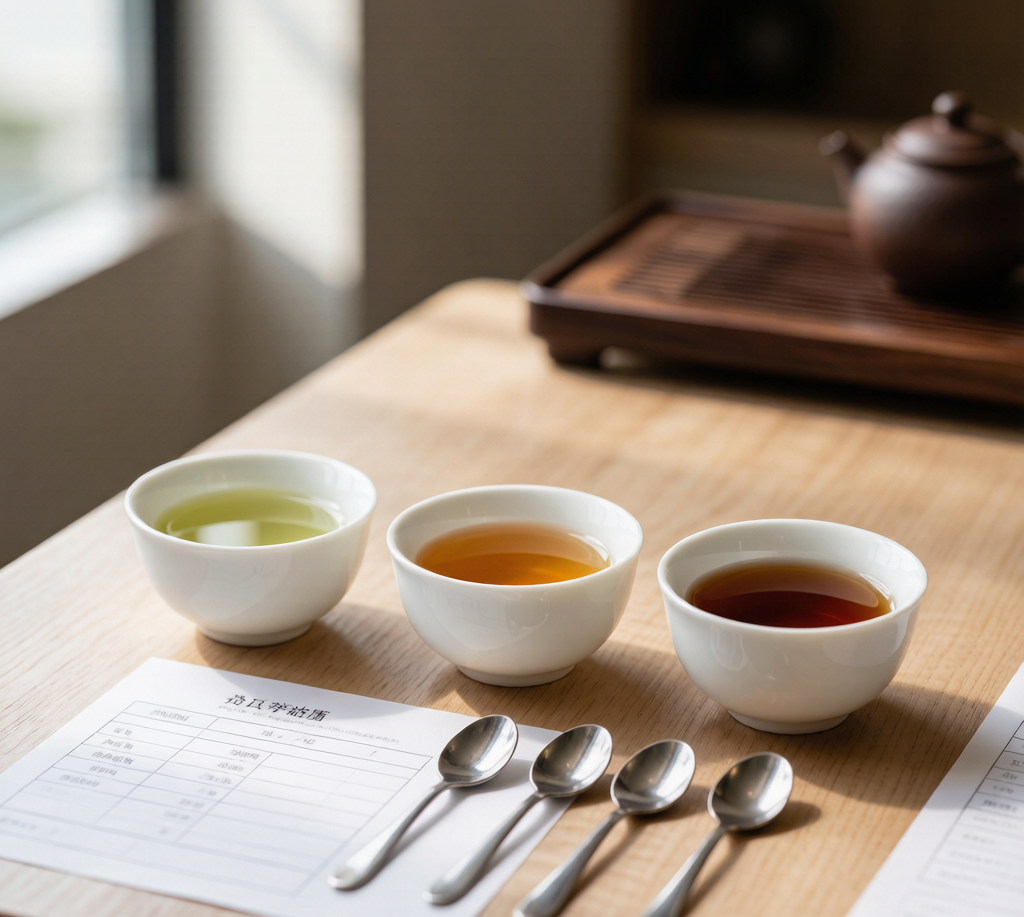
1. Taste correctly
Use consistent water temperature, leaf ratio, steep time, and vessel. Poor brewing can make a good tea look weak or a delicate tea taste bitter.
2. Compare by channel
A tea house may value complexity; a hotel may value consistency; a grocery buyer may care about packaging and recognition. Score each tea against its channel.
3. Check documents
Request product spec, harvest note, available lab report, origin information, and packing options. Strong samples should already connect to a document pack.
4. Estimate margin
Do not compare FOB price alone. Add freight, duties, local repacking, storage, shrinkage, marketing, and expected retail or menu price.
5. Test packaging
Matcha needs strong barrier packaging. Loose leaf may need resealable pouches or tins. Hospitality buyers may prefer bulk or service sachets.
6. Decide next step
After tasting, narrow to 2-3 teas. Ask for confirmed grade, current lot availability, final quotation, lead time, and document timeline.